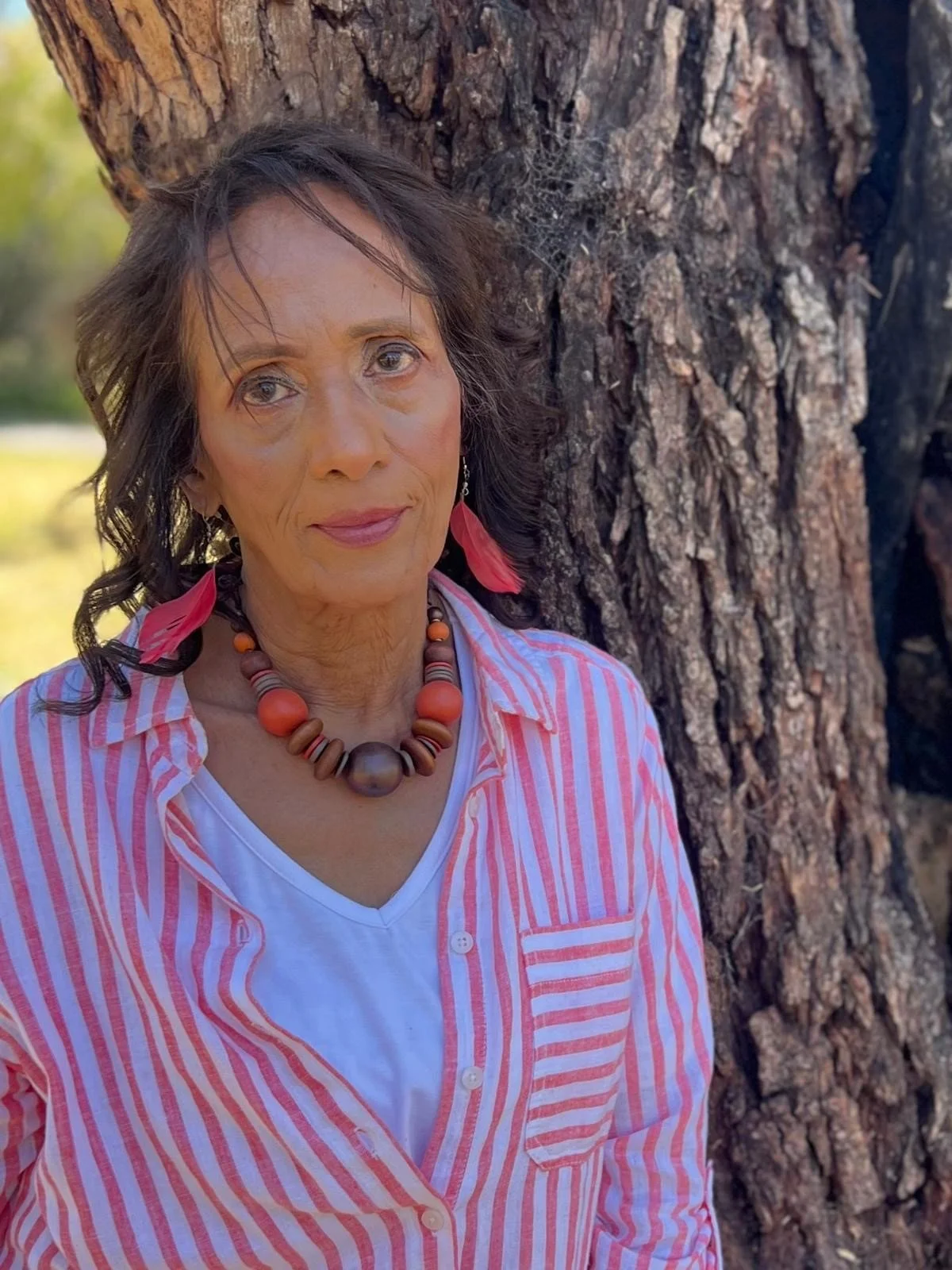
by Manjula
This story includes experiences that some readers may find difficult. Please go at your own pace, and feel free to stop reading at any time. If this brings up anything for you, support is available here.
My Mum Leila is from Sri Lanka. She was educated in English during British colonisation. She trained as a Montessori Educator and worked as a telephone operator until she got married at 21. My father stopped her from working so she could raise a family. She had eight children. She lost her independence and freedom while looking after the kids and serving my father. Growing up, I was not happy that such a smart woman with so many dreams had them taken away. But in that era, women either did not work, or they had to leave their jobs to bring up a family. No supports were available at that time. Family was the priority. Women listened to their elders, were tied by family values and led by the head of the house.
Growing up as one of eight, I was not happy that such a smart woman as my mother didn’t have the chance to fulfill her ambitions. Every year she visited the hospital for childbirth. Back then we always had big families. My sister and I had to look after our siblings, though we had maids for cooking and other outside work. I washed my mum’s soiled cloths by hand, which I found emotionally draining.
We had everything except freedom, especially to go out by ourselves or to talk to boys. My mother worked hard to keep us happy and healthy, neglecting her own health.
There were communal riots in Sri Lanka in 1983. As Tamils our lives were at risk. Mum and Dad applied to come to Australia. My mum always had this ideal of western countries and their lifestyles through reading novels, particularly love stories. She collected all the famous writers to read for leisure.
We arrived in Australia with some of my younger siblings in 1987. My family could not migrate together. Some of my siblings were given visas at different times.
When my youngest brother went to off to early education, Mum finally had the opportunity to work in childcare. She sat for the Public Service exam. Though she passed, the family decided that as she had no car or licence, she should not take the job. She is a shy person, not comfortable to start a conversation or seek out friendships. She did not have the confidence to travel by train on her own.
One day she went to one of her grandchildren's concerts. When she came home, my father was asking for his heart tablets. She panicked and it took her some time to get the tablets. She didn’t call the ambulance as she didn’t have the confidence but called my sister instead. She regrets that now, as Dad died soon after. She was in shock - she was now a widow in her sixties.
Over the years, she collected a shelf full of novels. She liked to read these when she was by herself with no children or grandkids making demands. She found quiet time for herself and became absorbed in reading. When she went out, she always bought novels or flowers as gifts. She visited libraries to find books she loved.
She would not be able to make her way through her novel collection. Everything changed one day in a way she never expected. She had been taking blood pressure tablets for some time. But all those years of going shopping, cooking the meals on time and neglecting her own health must have taken its toll.
My youngest brother’s family were living with Mum for a month with their newborn so that Mum could help out. One morning, my brother found her in her room with the drapes partially closed – she had collapsed before going to bed the night before and lay there for 11 hours without any help. My brother was devastated.
She was responding on the left side, but not on the right. My brother called an ambulance. Liquid was trickling out of Mum’s ear, suggesting that there was internal bleeding or injury. The paramedics took her to Dandenong Hospital. I had arrived at her home and travelled with her in the ambulance. I was in a shock and anxious. Arriving at the hospital, they wanted to drill her head to release the pressure. My siblings and I refused. We asked them to take her to Monash Clayton because we felt she might get better care there.
At Monash Clayton we had a family meeting. The results showed that an aneurysm had burst, causing a partial paralysis. We were told they would take her to the operation theatre soon to stop the bleeding. My siblings and I were all waiting, but she was not taken at the time they mentioned. We had to question them many times. Once they took her in, they asked us to go inside the theatre and say goodbye to her. They gave us tissues. We did not understand why. We had been planning to get her a bag for a hospital stay. They asked us not to go home. It took a while for us to work out that they thought she would not survive. We were puzzled. But guess what? She made it. The operation was successful.
This is the first hurdle she passed.
She was in ICU for five days. This was another hurdle for her to get through. We took turns, staying with her day and night. We did not trust that they wouldn’t take the supports away and leave her to die. My brother overhead a doctor speaking with the night staff, asking them to pull the life support of a young boy who was in the ICU before the family arrived. That panicked my brother. We decided to take turns and monitor the services. We willed her to get well so she could leave intensive care as soon as possible.
There were times when we felt that the staff at Monash Hospital were ignoring her, sometimes talking to others in the ward and not even smiling with her or asking her how she was feeling. Even though Mum could not speak, she seemed to listen to all the conversations with staff during our visits. Her fear was that they were going to dump her in a nursing home because she looked different and had no voice. Due to the bleeding of her left side, she was paralysed. She lost her short memory language skills and only remembered her mother tongue Tamil. We always made sure that we were on time to help feed her and check her wellbeing. She was sad every time we left her.
We trusted the system to do the right thing for all the patients and give good care. But I feel the system let us down. We had to fight for her rights and often had to argue with the decisions made.
After a couple of days, the hospital wanted us to move her to a nursing home. It felt to me like they were dumping her. It reminded me of how people buy lovely pets and abandon them when they can’t afford to keep them at home. I would see the video clips of people leaving a pet on the road. The poor dogs would run behind the cars for miles without knowing the situation. I always watch these videos with a heavy heart, and it brings tears to my eyes. My mum was in the same situation. Just imagine your beloved mum having to prematurely go to an aged care facility. She had not finished reading all the novels she had collected. She was the youngest in that ward. We pointed that out to the social worker and asked that Mum have a longer stay.
We pushed for Mum to go to rehabilitation. We worked with Mum by doing exercise therapy. I used my child’s puzzles to work on the hand and brain co-ordination on her left side. Every day, I went there to work like a physio. The hospital did not offer any physiotherapy as it was seen that she was not suitable for rehabilitation and should go to aged care. But Mum worked hard.
Because she had swallowing difficulties, they wanted to peg feed her. On the day she was to leave for rehab, I whispered in her ear: If you don’t swallow the food, they will send you to aged care. They will make a hole in your tummy and peg feed you. My siblings and I waited for her to come out. She looked down and sad, as if she had no energy. But the nursing staff said she swallowed the food. Oh! We ran and gave a kiss. She had passed another hurdle.
She moved to rehabilitation at Kingston Hospital. Mum didn’t have a voice to communicate. Even there, it felt like no one cared. She was just a person with no ability. But Mum is a smart woman. She used her charm to attract the care staff with her smile. I was surprised. I had not seen Mum’s beautiful smile for a long time.
But one day when my sister visited her, she found Mum was down and looking sad and miserable. My sister was upset and spoke to Mum quietly. She found out they had given her the wrong medication. She called the staff and informed them, and they accepted that they had made a mistake. Guess what? My mum survived.
Mum went home a couple of days later. She looked happy. We told her she was safe in her home with my sister’s family, and that she could sleep in her own bed.
But over the next few months, she had many seizures. We took her back to Monash Clayton. They were not happy to see us because we were always advocating for mum so strongly. We consulted a specialist for her condition, and they suggested surgery. While the surgery was successful, the recovery was long.
Whenever we visited Mum in hospital, she always looked forward to going home. One day when I went to feed her dinner, she was not eating well. I managed to trick her into eating a good portion. I told her if she got well soon, she could come home. When I was leaving, she was trying to push her walker to follow me home. My heart pounded. I had to go and sit with her again. She looked at me with tears in her eyes. I cried on my way home. Seeing her that way reminded me of a kitten dumped in the garbage, looking scared and frightened. I imagined the little body shaking, pleading to the owner to for rescue. I was so sad and heartbroken that night. I felt that she was not happy, that no one could understand what she was saying and no one can help.
But when I went back the next day, she looked better. She gave me happy look. She smiled beautifully with the nurses and staff. Oh! That told me that she is a smart woman, using her best weapon to please the staff so that they would send her home soon. I was proud of her – she was in survival mode.
I am happy to say that she lived for another 20 years away from hospital. Despite the challenges, she was surrounded with her daughter and her family, including all their pets - cats, dogs, a rabbit and a talking parrot.
With love and care in a home environment, she had a good and healthy life in her later years. I’m so pleased we stood our ground and advocated so strongly to meet her needs.