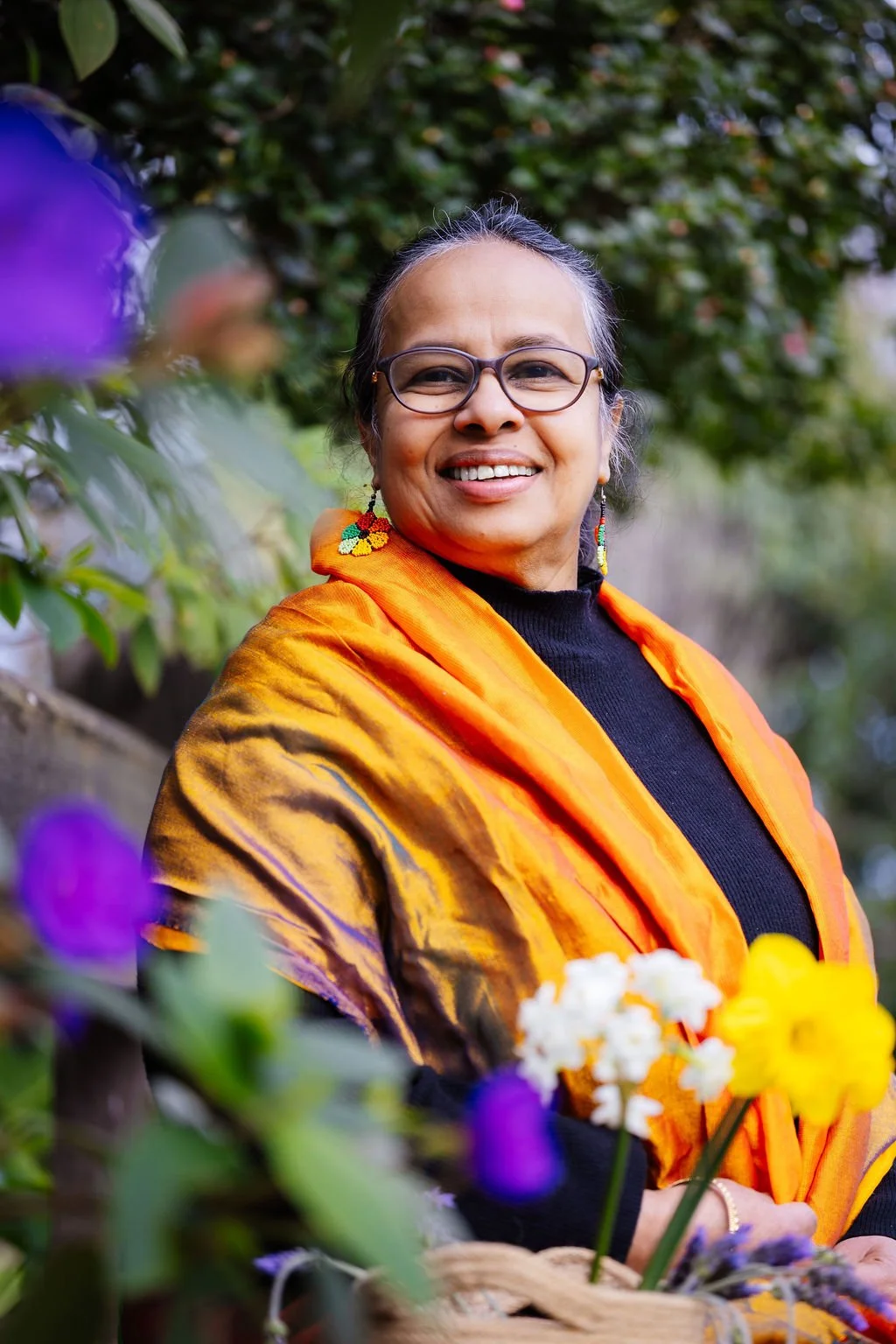
by Geetha Miththapala
This story includes experiences that some readers may find difficult. Please go at your own pace, and feel free to stop reading at any time. If this brings up anything for you, support is available here.
My darling Soraya, my beautiful granddaughter, I heard the recording Amma, your mamma, sent me of you singing “Mama Mal Iththak Wennam.” You sang it so beautifully and confidently. It made me remember why I called you “Mal Kumari”, Flower Princess, from your toddler days when I visited you in Sri Lanka.
When your mother and I used to take you for walks in your pram, there were several bushes you insisted we stop at: first the white jasmine, which had a heavenly fragrance. We would each take turns in smelling the flowers, soaking them into our hearts. We stopped next, by the school where the lovely orange and pink bougainvillea blossomed over the wall. There were also the cheerful yellow allamandas on the fence nearby. Finally, there were the delicate pink heart-shaped flowers that trailed down from barbed wire like a cascading waterfall, with their heart-shaped leaves, where we turned into the church. And in the church grounds, we would find the white frangipanis with the butter-yellow middles. In Sri Lanka, these are known as temple flowers. They gave out the most exotic perfume of all. You would collect quite a handful in your tiny hands, which would then overflow from the little basket that we took to carry them in, into the pram. At home, we would decorate your hair with them.
You loved flowers so much even then. Do you remember learning their colours and names? Do you remember arranging them in an earthen pot of water by the door when we got back home, making it look pretty and welcoming, and then Masty, our cat, coming to drink from it.
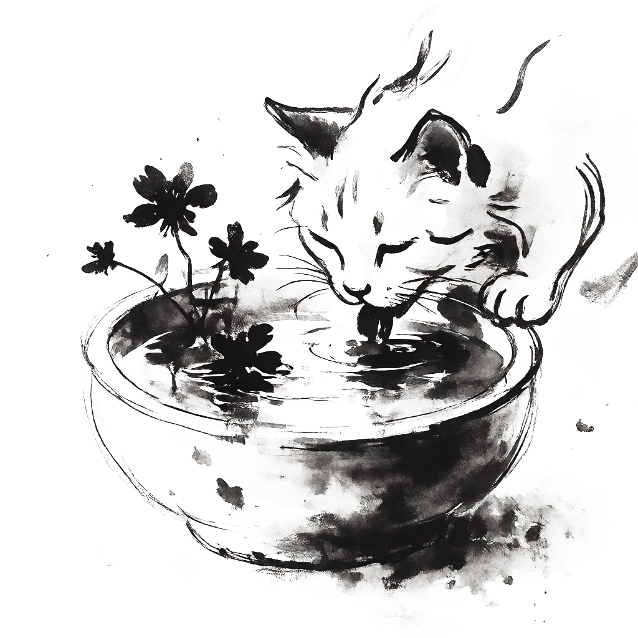
You were our flower princess growing up fast, appreciating the beauty of flowers even at that young age.
Now that you are seven, I wondered if you knew the meaning of what you were singing. It means: “I will become a blossom on a sprig of flowers laid at the feet of the Buddha.” What a beautiful thought that is.
To become a flower – to the Buddha, or to anyone you meet – means so much. It means being gentle, soft, delicate, and full of kindness. It means offering your beauty, your goodness, and your peaceful heart to everyone around you – your teachers, your friends, and even strangers.
This is where the simplest acts of kindness begin.
Both your Amma and I love flowers. Your Amma always loved to have flowers on her birthday. Gerberas were her favourite then. Now both of you like yellow roses.
We humans give flowers for birthdays, Mother's Day, Father's Day, Teachers' Day, and at other celebrations. We decorate wedding halls to brighten and cheer, and place them at funeral parlours to soften people’s grief. We offer flowers at temples, kovils (Hindu temples) and churches. Flowers are part of every important moment in our lives. They are nature's most beautiful creation of all.
But flowers are not only beautiful; they are also a source of life. They produce fruits and vegetables. They feed birds, butterflies, bees, and the largest and even the tiniest creatures on earth. They sustain the world in ways we do not always see.
And my darling, without birdsong in the morning, how would the human spirit awaken?
In the morning, when bees fly from flower to flower collecting nectar, they are not just making honey. They are helping life continue. So many living things depend on their quiet, tireless work.
That is why it is so meaningful that you sang that you would become a blossom for the Buddha. I want you to understand how special that wish is, so that one day you will remember what you wanted to be when you were just seven years old.
I want to tell you a little story.
At the entrance to my home in Hampton Park – in Melbourne’s outer South-East suburbs where I live – there was a bush filled with beautiful purple flowers and golden berries called Golden Dewdrops. I remember that when I first came to inspect this house, it was a mass of purple blooms, and I could not help thinking about what beauty nature had created. When the bush blooms during April and May, bees gather around it to collect nectar.
One day, I did what I consider to be a terrible thing. I was not mindful.
The garden had become overgrown while I was away. When I returned, long branches were brushing against the car and across the driveway, making the garden look rather unruly. So, I asked the gardener to trim some of the longer stems as the bush was full of purple blossoms, and I did not want it heavily pruned.
I did not realise that the flowers were full of nectar and provided an important source of food for the bees. I had overlooked something very important. I had not been mindful.
I should also have realised that gardeners love to cut and chop, and their task is to make things look neat and in place.
The gardener trimmed the bush back heavily.
The pretty purple flowers were scattered all over the ground. I tried to gather them and place them in a vase, but I knew something had been lost. The flowers were no longer alive on the bush, and the bees could no longer drink nectar from the sprigs that had been cut away from their parent plant.
I felt a deep sadness, my darling. I realised I had taken away food that the bees depended on.
But then, a few days later, I saw the bees again – this time visiting tiny wild dandelions in the garden. As they drank nectar from those little flowers, my heart felt light again.
I decided then that I would not do anything without first observing. I would be more cautious when pruning trees. I would not cut everything back. I would always leave some wildflowers for the bees. Because it is our duty to protect them.
I planted a few more lavender bushes so that bees would come to the garden, and when I see them flying from flower to flower, my heart is gladdened.
Did you know that a bee spends its entire life busily working – flying from flower to flower to make only about a teaspoon of honey, Soraya? Such a tiny amount for us, yet it represents a lifetime of work for a bee. What an industrious and tireless creature to keep the whole wide world alive, literally. It never ceases to amaze me, and I am humbled by the way they serve us human beings and all life on the planet.
Do you know that Australia has many kinds of native bees, darling Soraya? I learned their names recently.
There is the Blue-banded Bee, with lovely blue stripes on its body. They are attracted to blue and purple flowers such as lavender.
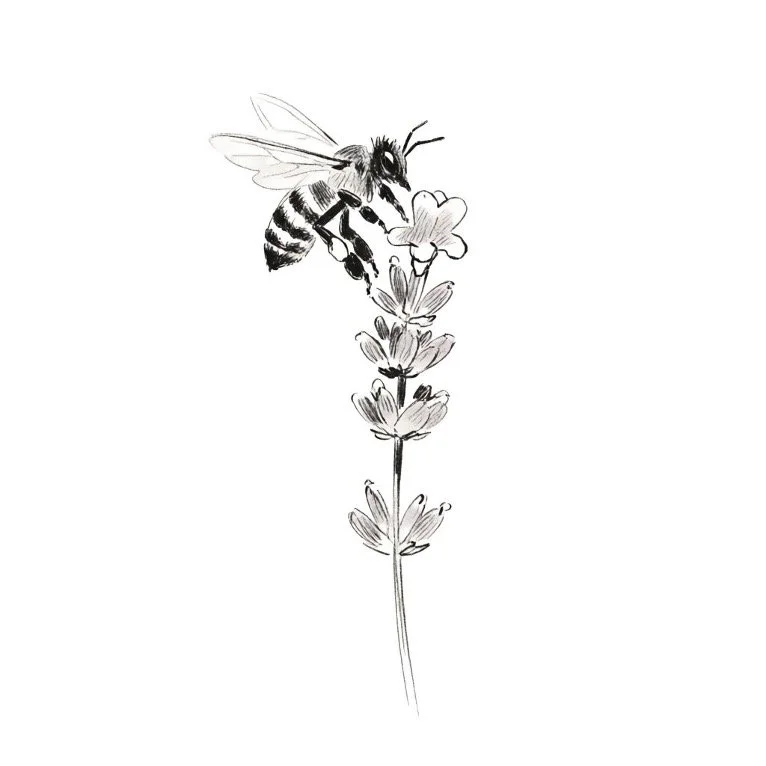
Then there is the Great Carpenter Bee. These large native bees make tunnels in wooden branches, which is how they get their name. The females are easy to spot, with black bodies and yellow chests. The males have pale brown bodies covered in golden hairs.
Next there is the Banksia Bee. They are also called Masked Bees because of the special markings on their faces. They look as though they are wearing masks! These bees love many kinds of flowers, but banksias are among their favourites.
Then there is the Teddy Bear Bee, which is very fluffy and metallic orange in colour. Teddy Bear Bees are buzz pollinators. They flap their wings so quickly that they vibrate, causing flowers to shake loose their pollen for the bees to collect. Isn't that amazing, Soraya?
There is also the Sugarbag Bee. Sugarbag Bees are very social creatures and live in nests with thousands of other bees. What a lot of relatives and friends that must be! Their nests are made in hollow trees and have a spiral-shaped honeycomb in the centre. They make honey, but they do not have a sting. They must be very gentle bees.
The Neon Cuckoo Bee is another fascinating one. It has distinctive shiny blue markings on a black body. These bees do not build their own nests; instead, they lay their eggs in nests made by Blue-banded Bees. I wonder whether the mother Blue-banded Bee recognises that it is different from her baby bee when it is born!
Finally, there is the Leafcutter Bee. Do you know why it is called that, Soraya? The Leafcutter Bees cut neat semi-circles from leaves and use them to build their nests because they prefer softer leaves. So, keep an open eye when you are next in Australia visiting and looking at Ammamma's rose bushes to see whether any little holes have appeared and the Leafcutter Bees have visited.
Now, do you also know that Australia has many native flowers that these bees love? And do you know that each state and territory has its own floral emblem?
Tasmania's floral emblem is the blossom of the Tasmanian Blue Gum. The Northern Territory has Sturt's Desert Rose. The Australian Capital Territory has the Royal Bluebell, and Victoria, where Ammamma lives, has the Common Heath. New South Wales has the beautiful Waratah. Ammamma loves the Waratah and tried very hard to grow it in her garden, but two plants died and I have now given up trying. Western Australia has the Red and Green Kangaroo Paw. Have you seen Kangaroo Paws? They really do look like little kangaroos' paws, and they come in different colours. South Australia has Sturt's Desert Pea, another beautiful flower, and Queensland has the Cooktown Orchid.
Isn't this wonderful?
Will you find out about the national flowers of Sri Lanka now, Soraya? I know that the beautiful ‘Na mala‘ is the national flower.
Flowers bring peace to the human soul.
That is why when I heard your song, I had tears in my eyes.
Your Renuka Achchi, Grand Aunt, said, *"Sadhu, Sadhu" when she heard you sing. Praise and blessings come naturally when we hear your little song.
In our culture, influenced by Buddhism and its message of compassion, we hold these ideas very close to our hearts. They are beautifully expressed through Sinhala, our mother tongue, which has been influenced by the ancient language of Sanskrit. Some meanings are so deep that they cannot be fully translated into English.
After teaching language for more than thirty years, Ammamma has learned that every language carries its own special feelings for those who speak it.
In the same way, it is important to respect all cultures and all people. In our traditions, just as people offer flowers to show gratitude and love, we offer betel leaves to elders and monks and seek blessings from them. We show respect to parents and grandparents by worshipping them too.
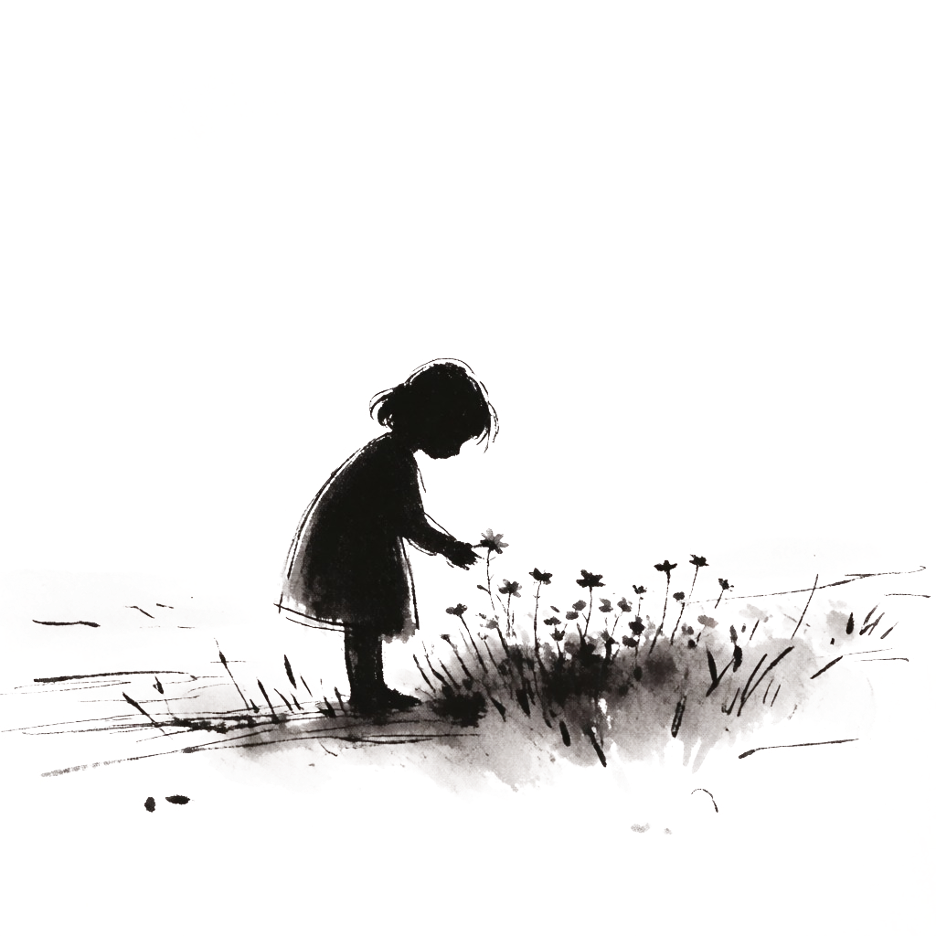
But wherever you are in the world – even in Australia, where I live and where you have visited – what matters most is kindness and respect for everyone, no matter their culture, religion, or background.
Our differences make us unique, but kindness brings us together. Just as each flower has its own colour, fragrance, and beauty, together they bring happiness to those who see them. It does not matter what colour they are, what fragrance they have, whether they have small petals or large ones, or whether they are delicate or sturdy. They all bring joy.
I recently listened to a Dhamma talk in which a Buddhist nun spoke about a mal maala-a flower garland. She explained how different flowers, with different shapes and colours, when woven together, create great beauty and bring joy to the heart.
Like the many flowers woven into a garland, she said, people of different faiths and nationalities should live together in peace and harmony, making the world a beautiful place for everyone.
And with that it is time for me to say good night, my dear granddaughter and beautiful flower
With all my love,
Ammamma ❤️